Facial Pain & TMJ · Charlotte, NC
Relief for Your Jaw, Your Headaches, Your LifeStart with the cause.
Persistent headaches, a jaw that clicks or locks, ear ringing, disrupted sleep — these are easy to dismiss and hard to live with. Many trace back to the jaw (TMJ/TMD). We look for the connection between your bite, your muscles, and how you feel, so relief comes from the cause.
5.0 · 301 Google reviews- LVI Fellow · Neuromuscular
- Charlotte's EMFACE Provider
- 20+ Years in Dilworth
5.0 ★
301 Google reviews
LVI Fellow
Neuromuscular dentistry
20+ Years
Caring for Dilworth & Charlotte
FDA-Cleared
EMFACE for TMJ dysfunction
Who even treats TMJ?
A doctor or a dentist? Often, a dentist is the right place to start.
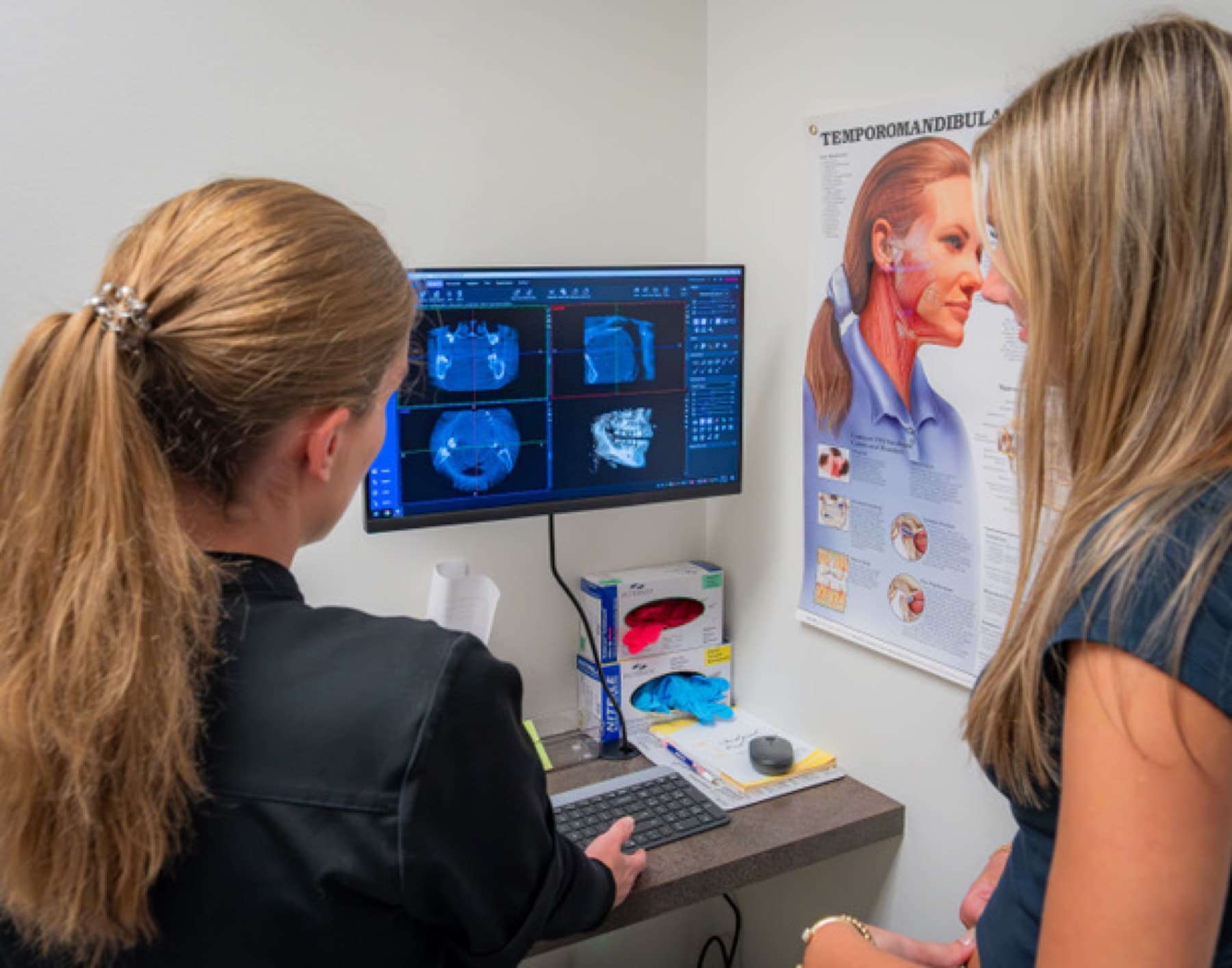
It’s a genuinely confusing question. Because TMJ problems usually center on the bite, the jaw joint, and the muscles that move it, a dentist with advanced neuromuscular training is frequently well-qualified to help. Dr. Kate is a Fellow of the Las Vegas Institute (LVI) with several years of postgraduate study in neuromuscular dentistry — the study of exactly how the jaw, muscles, and bite work together.
Meet Dr. Kate →Because we treat the smile, jaw, and face as connected, TMJ care here isn’t a bolt-on service — it’s central to how we think about your comfort and long-term health. It’s also the pillar where Dr. Kate’s training is most directly the answer to your question.
Could this be your jaw?
Signs that seem unrelated — but often aren’t
If several of these sound familiar, the jaw may be involved. A short evaluation can tell you.
- Frequent headaches
- Ear pain, ringing (tinnitus), or fullness
- Jaw clicking, popping, or a locked jaw
- Neck and shoulder tension
- Teeth grinding or clenching (bruxism)
- Disrupted or unrefreshing sleep
Frequent headaches especially can connect to the bite — see our headache treatment page for how that link works.
How we can help
Most TMD is managed without surgery. These are the areas we look at to understand your jaw and bite.
TMJ Treatment
If jaw tension has become your normal, it doesn’t have to be. Relief starts with understanding the cause.Headache Treatment
Many recurring headaches trace back to the jaw and bite — a connection we’re trained to find and treat.Sleep Apnea
Better rest and easier breathing, addressed thoughtfully alongside jaw and airway health.Straight & Healthy Smile
Alignment that supports comfort and long-term health, not just appearance.Electromyography (EMG)
Measuring how your muscles actually work, so treatment is based on data — not guesswork.T-Scan Digital Bite Evaluation
A precise, digital look at how your teeth meet — the detail that makes lasting relief possible.
Common questions
Straight answers on symptoms, who to see, treatment without surgery, and cost.
- TMJ (or TMD, temporomandibular disorder) often shows up as more than jaw pain: recurring headaches, ear pain or ringing, a jaw that clicks, pops, or locks, neck tension, teeth grinding, and disrupted sleep. Because these seem unrelated, many people live with them for years without realizing the jaw is the common thread.
- Yes. The jaw joint sits right next to the ear and shares nerve and muscle pathways with the head and neck, so jaw strain can refer as ear pain, ringing (tinnitus), fullness, or frequent headaches. Evaluating the bite and jaw muscles often reveals a cause that headache or ear treatment alone can miss.
- Both can be involved, which is why it’s confusing. Because TMJ problems usually center on the bite, the jaw joint, and the muscles that move it, a dentist with advanced neuromuscular training is often a well-qualified place to start. Dr. Kate is an LVI Fellow with several years of postgraduate study in neuromuscular dentistry — the study of exactly how those parts work together.
- TMD is not an ADA-recognized dental specialty, so no dentist is formally a TMJ “specialist.” What matters is real training and experience with the jaw and bite. In Charlotte, Dr. Kate offers a neuromuscular approach grounded in her LVI Fellowship and postgraduate study — focused on finding and addressing the underlying cause of your symptoms.
- For most people, yes — the majority of TMD is managed with non-surgical, conservative care. We start by understanding how your jaw and bite function, then build a plan around that. Surgery is not the usual starting point.
- It depends. TMJ care can fall under medical or dental billing depending on the situation, and coverage varies by plan, so there’s no one answer. We’ll review your specifics, explain what applies, and go over any available payment options — with a clear, personalized estimate rather than a surprise.
- Cost depends on what’s causing your symptoms and the plan that fits you, so a consultation is the honest way to get a real number. We’ll explain what affects the cost and give you a personalized estimate up front.
Areas we serve
Caring for Charlotte, from our home in Dilworth
Our office sits on East Blvd in Charlotte’s Dilworth neighborhood, so we’re a short trip for patients across the city’s urban core and greater Mecklenburg County.
Let’s find the cause — and the relief
A thoughtful evaluation is the first step. We’ll listen to your history, explain what we find, and be honest about your options and their cost.